
Hey Geo-Arbitrageurs!
If you’re new here: I sell options for income, live off the proceeds, and write about financial independence, geo-arbitrage and keeping more of what you earn. Subscribe if you want this landing in your inbox.

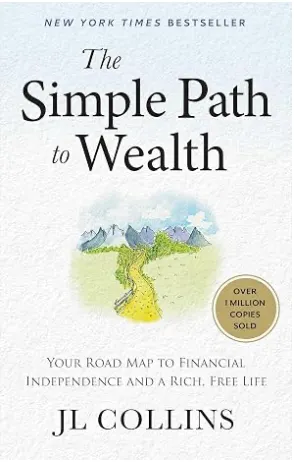
Confession time. The Simple Path to Wealth by JL Collins is on my yearly re-read list. I’ve quoted it in the Discord, referenced it across a pile of articles, and pushed it on more people than I can count. I was convinced I’d already reviewed it here.
I haven’t. I’ve talked about it a lot and written around it a lot, and somehow never sat down and done the review. My bad lol.
So let’s go.
A Dad Writing Letters to His Daughter
This is my favorite part of the whole story.
The book started as a series of letters Collins wrote to his daughter about money. She wasn’t especially interested in investing, and he knew it. So he took decades of hard-won experience and boiled it down into something plain enough that she could set it up once and get on with her life. He just gave his girl the shortcuts, what a legend!
Those letters went up on his blog as the “Stock Series.” Readers who had never met his daughter started following the advice. In 2016 it became the book, and a revised and expanded edition came out in 2025.
Since then, he’s basically become one of the go-tos in the investment space for people who can’t be bothered learning to invest. This makes me like him more.
Think about what he did there. He built a tool to help one person he loved, based on everything he’d learned, and it turned into something millions of people use to retire more securely. More importantly, it showed them how to invest in a way that takes a fraction of the time, stress and hassle most people assume it needs.
That’s a rare kind of generosity in a genre full of people trying to make finance sound so complex that you hand them your money and pay them a fat fee for the privilege.
Why This Is My Go-To Recommendation
I speak to a lot of people who want to know where to start investing, for themselves or for their kids. This is the book I give them.
It’s especially good for three groups:
- People without an investment background. Collins assumes you know nothing and never makes you feel stupid for it.
- People who don’t care about investing and never will. This is most people, and that’s fine. They want to set it up, forget about it, and spend their attention on their family, their work, or their next flight somewhere cheap.
- People who wake up financially in their 40s shitting themselves because they’ve left saving for retirement until it’s “too late” and don’t know where to start.

I received 4 of these messages in the last 8 months. Scary stuff.

If you’re in any of these camps, this book was written for you. Literally, in the daughter’s case.
The 4 Main Lessons (And How to Use Them)
1. Spend less than you earn, avoid debt, invest the rest
Debt is an anchor. Your savings rate is the engine. The gap between what you earn and what you spend buys what Collins calls F-You Money: enough that no boss, landlord or bank can push you around.
How to use it: Early on, your savings rate matters more than your returns. Geo-arbitrage is the fastest way to lift it. Move somewhere your money stretches further and you save more without earning a cent more. Obviously I’m a little biased here, but it’s true!
2. Buy the whole market with a low-cost index fund
Collins’s pick is VTSAX, a total US stock market fund. Most professional managers fail to beat the index over time, so buy the haystack and stop hunting for the needle.
How to use it: Outside the US, you likely can’t buy VTSAX. A UCITS global ETF does the same job. Mine is VWCE, bought monthly. For your kids: one broad index fund, an automatic monthly contribution, and eighteen years of leaving it alone.

Mum and Dad put in $1k when the baby is born, then $200 a month until the kid turns 18. That’s $44,200 in total, and by their 18th birthday it’s worth roughly $90k, assuming a 7% return after inflation.
Then the kid takes over the same $200 a month and keeps paying it until they turn 65. That’s another $112,800 from them.
At 65, the account is worth roughly $3.3M.
The kid put in $112,800 over 47 years and retires a multi-millionaire, with a 4% withdrawal paying around $130k a year for life. Most people spend their whole careers trying to work out how to do that. Your kid does it by keeping up a direct debit they inherited at 18.
Thanks Mum and Dad, Legends!
Now hopefully little Jimmy puts them up in a NICE retirement home and not a gulag in Siberia.
3. The market will crash. Don’t sell.
Crashes are normal. The market has always recovered and gone higher, on a ragged path. The people who get hurt are the ones who panic and sell at the bottom.
How to use it: Automate contributions so you keep buying on the way down. Stop checking daily. If you’re retired or close, hold a couple of years of spending in cash or bonds so you’re never forced to sell stocks in a slump.
If you already trade options or stocks like a lot of you do, downturns come with fatter premiums and cheaper entry prices, so they’re a good time to build income and grow the portfolio.
4. Know which stage you’re in: building or preserving
While you’re earning and adding money, hold mostly stocks. Once you’re living off the portfolio, add bonds to smooth the ride. Collins treats the 4% rule as a guideline, with room to spend less in bad years.
How to use it: Salary coming in? Stay in stocks. About to quit? Plan the first few years of withdrawals, since an early crash does the most damage. Flexibility to cut spending or move somewhere cheaper during a downturn is worth more than squeezing your withdrawal rate.
Again, geo-arbitrage is a great way to ride out a market crash or correction, because you can lower your cost of living and reduce the amount you need to draw from your portfolio. Check out this article I wrote last year about it.

If you’ve retired and are drawing on your portfolio when BAM! a recession hits, pack your bags, buy some plane tickets and plan some slow travel. That’s right. Recessions since WWII have averaged about 10 months, and markets can take a year or two after that to get back to their highs. So pick a few Geo Friendly countries and spend that stretch living it up abroad on less. When the market has pulled its socks up, you come back with a portfolio you never had to sell at the bottom, new experiences and some amazing stories.
Where I Take a Different Road
I’ll be upfront. Collins would probably raise an eyebrow at my options trading. His whole point is to do less, and I’ve chosen to do a bit more.
The way I square it: the simple path is the core. The index fund is where my money lives long term. Options are how I generate the income that funds those monthly VWCE purchases. If you never want to touch an option in your life, the book alone will get you to financial independence. If you want to speed things up with a low-maintenance income stream on top, that’s what we do in the Alpha Desk.
Get 14 days free in the Alpha Desk
The Verdict
Read it. Make your partner read it! Set up an account for your little Jimmy. Then give a copy to the person in your life who keeps saying they should “do something about investing” and never does.
It’s short, it’s clear, and it respects your time. The best investing book for most people is one that lets them stop thinking about investing, and this is it. That’s why it stays on my re-read list every year.
Hit reply and tell me: who’s the one person you’d hand this book to? I read every response.
Cheers
Andy
Valencia

Be an Adult. This review reflects my own views and my own investing approach. Investing carries risk, including potential for substantial losses, and past results are no guarantee of future performance. This is not financial advice — do your own research or speak to a licensed professional before investing.